Plain explanations, with the sources named
What the verdict actually meant
Every figure on these pages is computed from our own engine and can be checked. Where traditions disagree we say so; where a number is disputed we say that too.
Not sure which subject owns your situation? Find your question in the matchmaking navigator →
Start with what happened
Three useful first answers
Choose the question closest to your situation. Each answer names the rule, the evidence, and what you can check next.
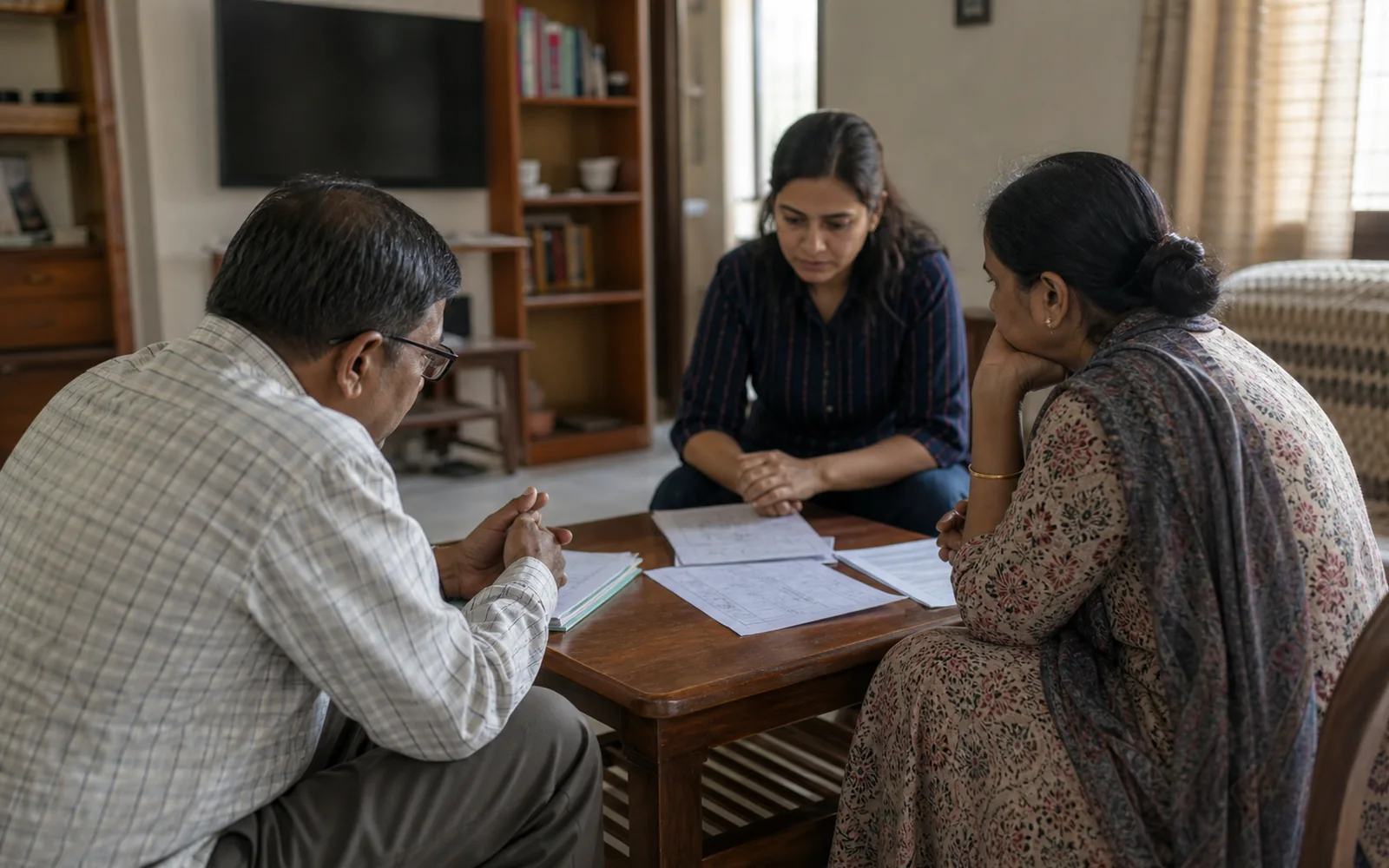 A match was refusedYour match was refused. What are your actual options?A verdict is one tradition’s reading of two charts. Here is how to find out which reading you got, and what can honestly be done about it.Read the answer →
 Two answers conflictWhy two astrologers gave you opposite answersAcross equally weighted possible pairings, 56.4% trigger a tested difference or veto. See what the combined census checks actually measure.Read the answer →
 You have a scoreWhat is a good Guna Milan score, really?We scored every possible nakshatra pairing. The average is 20.1 out of 36, and two-thirds clear the pass mark — which changes what your number means.Read the answer →
9 evidence-led answers
Real-life decisions
The questions that begin after a score arrives—and the questions no chart can answer.


Can a Manglik marry a non-Manglik?
Compare both charts under the same Manglik rules, reference points and cancellations before treating one Manglik label as a marriage verdict.
Read answer →
When is a Kundli matching second opinion useful?
Learn what a Kundli second opinion should recompute, which inputs and settings it must disclose, and when another verdict adds no evidence.
Read answer →
Does Nadi Dosha say anything reliable about children?
Separate the traditional Nadi calculation from medical fertility, pregnancy, blood-group and genetic questions, with clear next steps.
Read answer →
What can Kundli matching show without a birth time?
See which Moon-based matching results may remain stable without an exact birth time, and which Lagna, house and Navamsha claims cannot.
Read answer →
How should Kundli matching be used in a love marriage?
Use Kundli matching without erasing years of relationship evidence: verify a refusal, speak with parents and protect consent and safety.
Read answer →
The marriage questions astrology cannot answer for you
Discuss consent, safety, money, children, careers, caregiving, family and conflict—the compatibility questions no Guna score receives.
Read answer →
You share a birth star. Which rule does that actually break?
Can a same nakshatra couple marry? Which rules a shared birth star triggers, why Gana is unaffected, what padas change, and which cancellations address it.
Read answer →
Nothing in the chart moved
Kundli matching for a second marriage: why the calculation is identical, what practitioners add by convention, and what a chart cannot say about the past.
Read answer →
The calculation has no field for community
Kundli matching for an inter caste marriage: why no koota takes community as an input, what Varna Koota scores, and how to tell a rule from an objection.
Read answer →3 evidence-led answers
If your match was refused
What a refusal actually is, and what can honestly be done about it.
Your match was refused. What are your actual options?
A verdict is one tradition’s reading of two charts. Here is how to find out which reading you got, and what can honestly be done about it.
Read answer →
How to ask for the reasoning behind a verdict
Use five respectful questions to ask an astrologer about a kundli verdict: the method, settings, veto rule, cancellation and evidence behind it.
Read answer →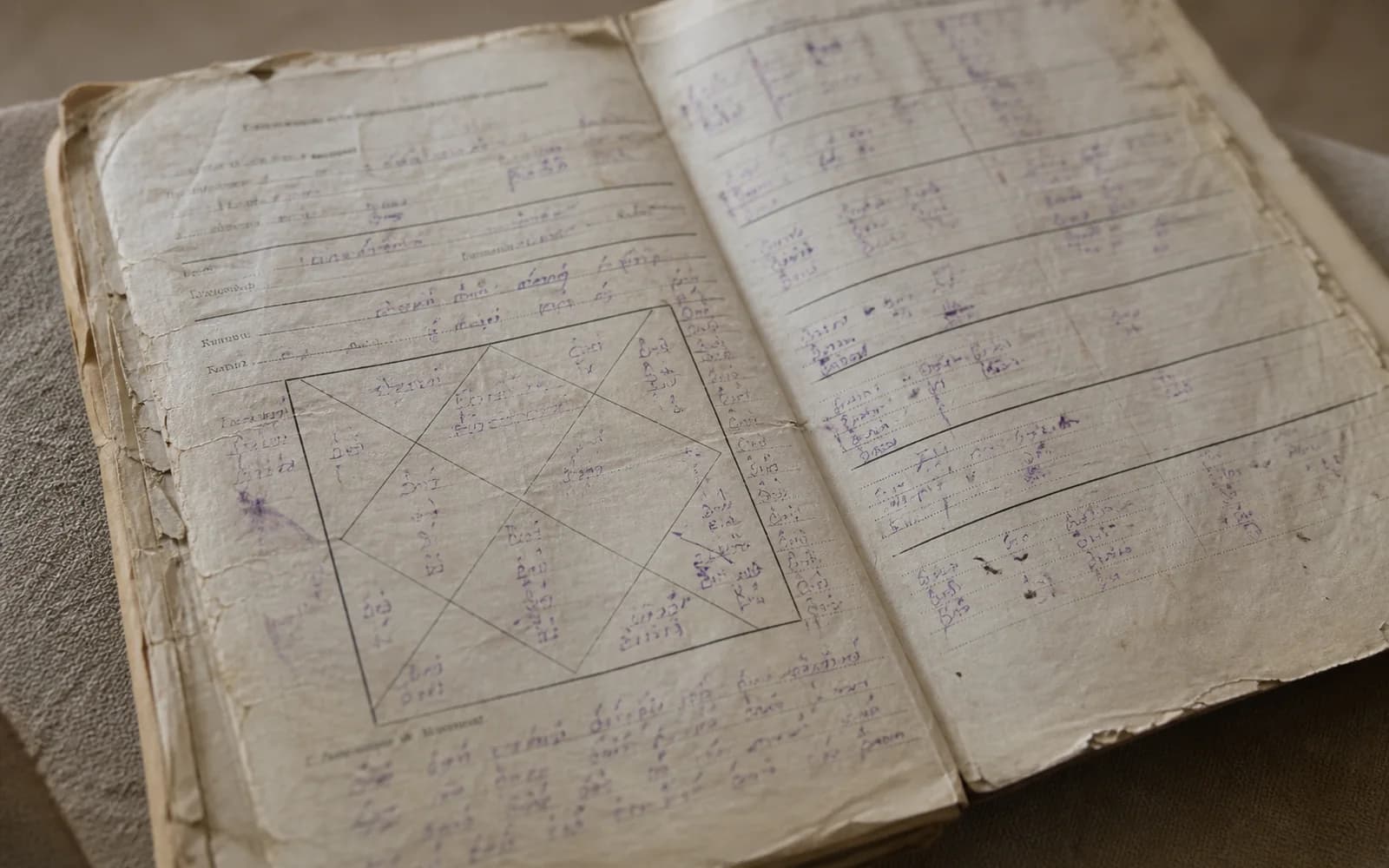
Is your birth time even right? A four-minute test
See how birth-time accuracy affects Lagna, houses and matching verdicts, why a few minutes matter for some charts, and how to test your own time range.
Read answer →12 evidence-led answers
The doshas
The verdicts that end conversations — how common each one really is.

Manglik dosha: the same chart, five different answers
Compare five documented Manglik Dosha rules and their measured 11.7%–73.0% verdict rates to see why the same birth chart can receive different results.
Read answer →
Are you actually manglik? It depends who you ask
Manglik calculators can count different houses and judge Mars from different reference points. See how those two choices change the same chart’s verdict.
Read answer →
The reference-point problem nobody explains
See how Manglik Dosha is calculated from Lagna, Moon and Venus, why the reference point changes far more verdicts than the house list, and what to check.
Read answer →
Nadi dosha: one in three possible pairings
One third of equally weighted birth-star pairings return zero Nadi points. See the calculation, its limits and documented cancellation conditions.
Read answer →
Bhakoot dosha: half of possible Moon-sign pairings
Bhakoot Dosha appears in exactly half of all Moon-sign pairings. See why that base rate matters and how Raman’s directional reading can change the result.
Read answer →
"Partial Kaal Sarp" is not a classical category
The strict test is simple and rarely met. The widely sold "partial" version has no standing in the classical texts, and pujas are priced against it.
Read answer →
Sade Sati: seven and a half years of what, exactly?
Understand the three Sade Sati phases as Saturn crosses the signs before, of and after your natal Moon—and the limits of what this transit can predict.
Read answer →
Rajju dosha, and why your North Indian report never mentioned it
Rajju Porutham can veto a marriage match in Tamil practice but is not part of North Indian Ashtakoota. See why the two systems treat it differently.
Read answer →
Why dosha cancellation rules differ between traditions
How scope, reference points and school-specific exceptions produce different cancellation verdicts — and how to read the cited rules critically.
Read answer →
Gana dosha: Rakshasa is a category, not a character
Rakshasa Gana is one of three classifications assigned to nakshatras. Learn what it means in Gana matching—and why it does not describe a person’s nature.
Read answer →
What "dosha" meant before it meant "defect"
Trace what “dosha” means in astrology, how an imbalance became a feared verdict in modern matching, and what the original idea asks readers to weigh.
Read answer →
What a remedy is being sold as, and what it is
Kundli dosha remedies, examined honestly: how a cancellation differs from a remedy, what the texts prescribe, and the four questions to ask before paying.
Read answer →7 evidence-led answers
Why answers differ
How scoring tables, cancellations, regional systems and veto rules can change a reading.
Why two astrologers gave you opposite answers
Across equally weighted possible pairings, 56.4% trigger a tested difference or veto. See what the combined census checks actually measure.
Read answer →
The five traditions of kundli matching, and who follows each
Compare five kundli matching methods: their regions, scoring rules, vetoes and software lineages, and see why the same pair can receive different verdicts.
Read answer →
North versus South matching is not a style — it is a different system
Eight kootas against ten poruthams, different weights, different doshas counted. Not two dialects of one method — two methods.
Read answer →
Why the software your astrologer uses changes the verdict
Two of the five traditions we implement are software defaults, not textual schools. Millions of reports carry their choices without naming them.
Read answer →
Ayanamsa: the 1.4° that can move a Moon across a boundary
Understand what ayanamsa is, why Lahiri and Raman differ by about 1.4°, and how that gap can move the Moon into another nakshatra and change a match.
Read answer →
How to read any matching report critically
Five questions that will tell you more about a report than the score on its front page — and that any honest astrologer will be glad you asked.
Read answer →
The score reads one planet. A full review reads the chart.
Full kundli matching beyond Guna Milan: what a Moon-based score measures, what the lagna, seventh house and Navamsha add, and when the score is enough.
Read answer →8 evidence-led answers
The score itself
What 36 gunas measure, and where your score sits among possible chart pairings.
What is a good Guna Milan score, really?
We scored every possible nakshatra pairing. The average is 20.1 out of 36, and two-thirds clear the pass mark — which changes what your number means.
Read answer →
The 36 gunas, one koota at a time
See how the 36-point Guna Milan score is built from eight kootas, what each koota measures, its maximum points and real full-mark rate.
Read answer →
Why 18 out of 36 became the pass mark
Learn where the 18-point Guna Milan threshold comes from, what passing it does and does not mean, and why two-thirds of all pairings clear it.
Read answer →
Varna koota: one point out of 36, and a printing error
The smallest koota, and why one printed table conflicts with the elemental grouping used by our selected scoring table.
Read answer →
Yoni koota and the 7.3% full-marks rate
Only 7.3% of pairings score full marks in this koota. Here is the measured rate and both matrices in use.
Read answer →
Graha Maitri: two scoring conventions, one silent choice
Compare the two documented Graha Maitri scoring conventions for Moon-lord friendship, see where their point scales differ and identify which a report used.
Read answer →
Tara koota, counted in one direction or both
See how Tara Koota changes when star distance is counted one way or in both directions, and how to identify the convention behind a different score.
Read answer →
The 27 nakshatras, and what matching actually reads from them
Explore all 27 nakshatras and the Gana, Nadi, Yoni, Rajju and other attributes used in kundli matching, with a detailed page for every birth star.
Read answer →6 evidence-led answers
Regional systems
Tamil, Kerala and northern practice, each on its own terms.
10 Porutham: the Tamil system, explained properly
Learn the ten poruthams used in Tamil marriage matching, their weights and grades, and how this Dashakoota system differs from North Indian Ashtakoota.
Read answer →
Dina, Gana, Mahendra: what each porutham tests
Use this ten poruthams list to see what each test compares, how it is graded and which Porutham can independently stop a marriage match.
Read answer →
Papasamyam: how the South weighs the malefics
Learn the meaning of Papasamyam, how malefic influence is counted in both charts, and why Kerala and Tamil matching ask whether the two totals balance.
Read answer →
Kerala matching, and where it parts from Tamil practice
Compare Kerala and Tamil horoscope matching by porutham weights, Papasamyam and veto rules, and see where two southern systems reach different verdicts.
Read answer →
Which system should apply to an inter-regional marriage?
North and South matching systems may disagree in an inter-regional marriage. Learn how to compare both without treating either as universally neutral.
Read answer →
Chevvai Dosham, and the four other verdicts on the same chart
Learn what Chevvai Dosham means in Tamil matching, which Mars houses it uses, and why other traditions can judge the same chart differently.
Read answer →3 evidence-led answers
Where we stand
What we claim, what we refuse to claim, and why that is the product.

What we will not tell you, and why
Understand astrology prediction limits on this site: we compare named matching traditions and base rates, but do not predict outcomes or sell remedies.
Read answer →
A name cannot tell you a nakshatra
Kundli matching by name accuracy, examined: the namakaran syllable convention runs from chart to name, and reversing it silently scores the wrong person.
Read answer →
Whose birth details are those?
Is online kundli matching safe? What the free tools keep, what a paid report has to keep, and whether you should enter a partner’s birth details at all.
Read answer →