The score itself · Evidence-led explainer
What is a good Guna Milan score, really?
We scored every possible nakshatra pairing. The average is 20.1 out of 36, and two-thirds clear the pass mark — which changes what your number means.

An Ashtakoota total is only meaningful against the distribution it came from, and that distribution has a mean of about twenty out of 36 with two-thirds of all pairings clearing the conventional pass mark. If a match has been assessed, someone has handed you a number. Perhaps it was seventeen, and the conversation ended there. Perhaps it was twenty-six, and the room relaxed. Either way the number arrived without a scale attached. Nobody said what an ordinary result looks like, or how many couples land exactly where you have landed.
That scale does not have to be guessed at. There are 27 nakshatras of four padas each, so 108 positions, and every ordered pairing of one position with another is a match that could exist. We scored every one of the 11,664 pairings — the whole population, not a sample drawn from it. What comes back is a curve, and your number sits somewhere on it.
What does an ordinary pairing score?
About twenty out of 36, with no thought given to compatibility at all. The mean Ashtakoota total measured over the complete set of pairings is 20.1. The median is 20.5. Take two people at random, with no matchmaker and no shortlist, and that is roughly where they land.
This single fact rearranges most conversations about scores. The conventional line at 18 is not the middle of the range and it is not a demanding standard. It sits below what an arbitrary pairing produces. 66.7% of all pairings reach 18 or more.
Two-thirds of all possible couples clear the pass mark without anyone selecting for it.
There is a tidy reason the mean lands where it does, and it is worth a minute because it demystifies the whole scale. Each of the eight kootas has its own average return across the population, and those eight averages add up to the average total. Nadi returns 5.3 of its eight points on average because two pairings in three win it outright. Bhakoot returns exactly half of its seven, because it is a coin flip. Graha maitri returns 3 of five, gana 3.3 of six, yoni 1.9 of four. Stack them and you have your twenty. Nobody designed the average to be twenty; it fell out of eight tables that were each written for their own reasons.
Which is not the same as saying the line is arbitrary, and the argument for where it came from belongs on its own page — why 18 became the pass mark takes that up. What matters here is the arithmetic position. A couple told they “passed” at 19 have been told they landed where most people land.
These are counts, not estimates. There are exactly 108 nakshatra-pada positions, so 108² is every ordered pairing that can exist. No seed, no sampling error, nothing that would come out differently on a second run. You can reproduce the whole distribution from the open CSV and JSON dataset.
How far up the scale does your number actually sit?
Further than most people assume at the bottom, and much less far than most people assume in the middle. Percentages are easier to hold onto than a curve, so here is the ladder, each rung measured over the same complete population.
- 21 or more — 49.5% of pairings. Roughly half. A score of 21 is the coin-flip point.
- 24 or more — 33.8%. Now you are in the top third.
- 28 or more — 6.9%. Fewer than one pairing in ten.
- 30 or more — 2.8%. Rare.
Run it the other way and the bottom of the scale has its own shape. A tenth of all pairings score 12 or below; a tenth score 27 or above. The whole middle eighty per cent of the population of pairings is squeezed into the fifteen points between those two figures.
So the densely occupied part of the scale is narrower than the printed range. Scores such as 4 and 33 do occur in the published dataset, but they are uncommon. The score-page directory is selective; a missing page does not mean a total is impossible. Other conventions or adjusted scores need their own checks. A family treating 24 as their threshold is applying a far stricter filter than a family treating 18 as theirs, even though both numbers get described with the same word: minimum. The gap between those two positions is about a third of the equally weighted possible pairings.
Why do the totals pile up in the middle?
Because the 36 points are eight separate tests with wildly unequal weights, and the two heaviest pay all or nothing. Nadi alone is worth 8 points, close to a quarter of the total. Bhakoot is worth 7. Between them they carry 15 of the 36, and in the common convention each one either pays in full or pays nothing.
The small tests behave in the opposite way. Varna is worth a single point and 62.5% of pairings take it. Tara pays out on a graded scale and never falls to zero at all — 2 of its 3 points is the average return. So almost every pairing starts from a floor of quietly accumulated small points, and then the two big blocks land or they do not.
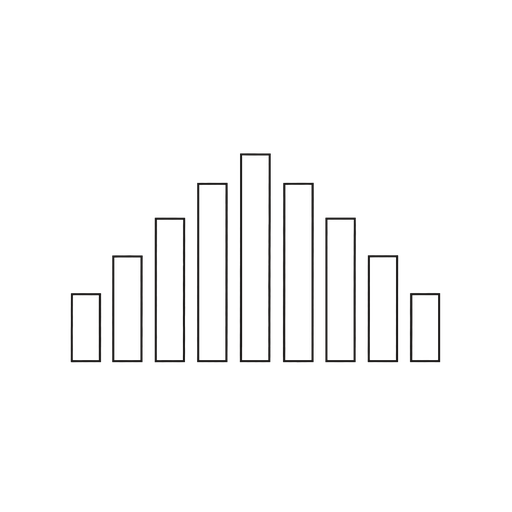
That produces a curve with a fat middle and thin shoulders. A total does not slide smoothly from 19 to 20 to 21; it jumps by seven, or by eight, or by fifteen. Four outcomes on the two heavy kootas — both won, nadi only, bhakoot only, neither — account for most of the spread you see in the figure above, and the six lighter tests decorate the edges.
Once you can see that, a lot of the drama around one or two points evaporates. Moving from 20 to 22 is a decoration. Moving from 20 to 27 is a different bhakoot verdict, which is a different question entirely, and the bhakoot page has the measured rate for it.
Can the same total mean two different things?
Routinely, and this is the single most useful thing to understand about a bare number. Twenty points can be reached with nadi intact and bhakoot at zero. It can also be reached with bhakoot intact and nadi at zero, plus a couple of small kootas going the other way. Both couples are handed the number twenty. They are not in the same situation as far as the tradition doing the scoring is concerned.
The difference matters because the objections are not interchangeable. Nadi at zero is the finding the classical sources treat with the most gravity, and it happens to about a third of all pairings. Bhakoot at zero is a coin flip across the population. A family that would have proceeded at 20 with one composition will refuse at 20 with the other, and the total gives them no way to tell which they have.
Put numbers on it. A pairing that wins nadi, loses bhakoot, and takes the light kootas at about their average rates lands in the high teens. A pairing that loses nadi, wins bhakoot, and does the same lands in the high teens too. Same total, and the second couple carries the finding the classical sources treat as the grave one while the first carries the finding that appears in half of the equally weighted possible pairings. Handed only the sum, the two families may have exactly the same conversation, which is the wrong outcome by the tradition’s own lights.
There is a third case that gets missed. A total in the low twenties built entirely from small losses — a point here, half a point there, both heavy kootas won — is arithmetically unremarkable and traditionally almost unobjectionable. It reads on paper as worse than a 24 assembled around a nadi failure. The sum has inverted the ranking that the tradition itself would apply.
Which is why a report worth reading prints the eight components with the points each scored, and names the rule behind any zero. The guna milan calculator shows the split rather than the sum, and the koota-by-koota walk gives the measured full-marks rate for each of the eight so you can see whether your own loss is ordinary or unusual.
Is the total even a fixed quantity?
Less fixed than a number out of 36 looks. A score reads like a measurement, as though the same two charts must produce the same figure wherever they are run. Several of the eight kootas have more than one documented scoring convention behind them, each traceable to a named tradition, and each defensible on its own terms.
The tara count can be taken in one direction or in both. Graha maitri has two published tables that disagree about the asymmetric cases, where one planet counts the other a friend and gets neutrality back. Vashya sources differ on where Scorpio and Leo belong. Varna tables differ between printed editions. None of these is an error; they are lineages doing what each has always done.
Comparing five documented traditions across every possible pairing, 56.4% of enumerated pairings trigger at least one tested difference or veto. This combines threshold, cancellation, system and veto checks; it does not measure typical point changes. A point can cross the threshold near 18, while a veto can matter within a tradition even when the total is higher.
The published sample case makes the point without any arithmetic. Priya and Arjun score 17 under the North Indian tables and 13.5 under the South Indian ones — and the lower pair of totals are the two that accept the match. A number cannot be read without knowing whose number it is.
What would a genuinely useful threshold have to look like?
It would have to be stated as a percentile rather than as a raw total, and almost nobody states it that way. This is the part worth arguing with. A cut at 18 sounds precise. What it actually says is “be in the top two-thirds of arbitrary pairings”, which is a much weaker statement than it sounds and a much easier one to satisfy.
There is a second problem, and it is the more interesting one. The pairings being scored in real life are not random draws. By the time two charts reach an astrologer, the couple has usually already been filtered by region, community, family network and a dozen other things — the marriage-market literature on India, from Banerjee and colleagues on caste and mate selection onward, documents how narrow that filtering can be. Some of those filters correlate with nakshatra distribution through regional naming and birth-registration practice, and some do not correlate at all.
The honest position is that we do not know the score distribution of actually-proposed couples, only of possible ones. Anyone quoting a percentile for real matches is quoting a number nobody has measured. The base rates on this site are what they say they are: the population of all pairings, which is the right yardstick for “is this number unusual in principle” and the wrong one for “is this number unusual among people like us”.
Worth saying plainly, because the temptation to quietly upgrade the first into the second is strong and the site would be worse for it.
What does a high number not tell you?
Anything about how a marriage will go. That is not modesty, it is the limit of what the calculation contains. Eight lookups against eight tables, taking as input two Moon longitudes and, for a couple of the tests, the two Moon signs derived from them. Nothing about either person is in there.
A few specific things the total also leaves out. Manglik sits entirely outside the 36 — it is judged from Mars against houses, not from nakshatras, and on the same charts 61.4% are manglik under one school and clean under another. A match can score 28 and still be refused on that axis. The South Indian porutham systems are a different instrument again, with their own vetoes that no Ashtakoota total records.
And the total is only as good as the birth data underneath it. The Moon moves about thirteen degrees a day, so a nakshatra boundary is crossed roughly every twenty-two hours and a pada boundary about every five and a half. A birth time wrong by an hour rarely moves the nakshatra; a birth date recorded from memory, or a time-zone offset applied from the wrong historical rule, can move everything. The positions themselves are the settled part — they come from the JPL ephemeris, and the arcsecond-level agreement there is not where any disagreement lives.
Who scores at the very ends of the curve?
Almost nobody, which is the part of the scale families argue about most and encounter least. The printed range runs from zero to 36. The lived range is much narrower, and knowing its actual ends stops a lot of needless comparison.
Consider what a total in the mid-thirties requires. Both heavy kootas won outright, which already cuts the field to a third of pairings. Full marks on yoni, which happens in 7.3% of cases and is by some distance the hardest of the eight to take cleanly. Full graha maitri, taken by 38.9%. Full gana, taken by 33.3%. Those conditions have to coincide, and coincide they largely do not: under three per cent of pairings reach 30 at all.
The bottom is thin for the mirror-image reason. To score in single figures a pairing has to lose both heavy kootas and lose most of the light ones, and the light ones are mostly won by default. Tara alone guarantees a floor, because it never returns nothing. Varna is taken by roughly five pairings in eight. So even a badly-scoring pairing usually arrives at eleven or twelve rather than at three.
The practical upshot: if you have been handed anything between about twelve and twenty-seven, you are inside the central band of this enumeration, and the difference between your number and a cousin’s number two points away is smaller than it feels. If you have been handed something outside that band, in either direction, it is worth checking the birth data and the scoring convention. An extreme total alone does not prove an input error; we have not measured how often input mistakes produce such totals.
What should you ask about the number you were given?
Three questions, and they are all reasonable to put to an astrologer rather than confrontational. None of them asks anyone to change their conclusion. They ask for the working.
Which kootas lost the points? Eight numbers explain a total that one number cannot. Ask for them separately, with the points each scored out of its own maximum. If a zero appears on nadi or bhakoot, ask which rule produced it and whether any of the documented cancellation conditions were checked — several schools record them, and they are specific enough to be looked up.
Which tables were used? By name. Most practitioners work from a particular lineage or a particular published panchanga and can say so immediately. The classical sources are printed and scanned — Raman’s Muhurtha and the Jataka Parijata translation among them — so the answer can be followed back to a page rather than taken on trust.
How far from a threshold is it? A score two points from a line is a different situation from one ten points clear, because the convention choices above move totals by about that much. Distance from the line tells you how much weight the number can carry before it starts wobbling.
Where does your exact number sit?
Each of the pages below is this same measurement narrowed to one score. Where that total sits in the distribution, and which koota most often falls short at exactly that number.
- 8 out of 36
- 9 out of 36
- 10 out of 36
- 11 out of 36
- 12 out of 36
- 13 out of 36
- 14 out of 36
- 15 out of 36
- 16 out of 36
- 17 out of 36
- 18 out of 36
- 19 out of 36
- 20 out of 36
- 21 out of 36
- 22 out of 36
- 23 out of 36
- 24 out of 36
- 25 out of 36
- 26 out of 36
- 27 out of 36
- 28 out of 36
- 29 out of 36
- 30 out of 36
- 31 out of 36
- 32 out of 36
A score is not meaningless. It is eight tests added up under a set of choices somebody made, landing somewhere on a curve that until now nobody had published. Look at where yours falls before anyone tells you what it means.
Questions people ask
Is 18 out of 36 a good Guna Milan score?
It is the conventional pass mark, but it sits below what an arbitrary pairing produces. The mean across every possible pairing is about twenty, and two-thirds of all pairings reach 18 or more. Clearing 18 places a couple in the ordinary range, not an unusually favourable one.
How rare is a score of 30 or more?
Under three per cent of the equally weighted possible pairings reach 30 in this enumeration. In the raw 36-point calculation, Nadi zero caps the total at 28 and Bhakoot zero caps it at 29. A raw score of 30 or more therefore requires both components to receive full points; rarity itself is not the reason.
Why do two calculators give my match different totals?
Several kootas have more than one documented scoring convention — the direction the tara count is taken in, which graha maitri table is used, which varna and vashya groupings a source prints. Each convention traces to a named tradition. A bare total does not record which one produced it.
My total is 22. Is that better than 20?
It is two points further up the same distribution, and both sit in the crowded middle. The more useful question is which kootas the missing points came from, because losing them on one heavy koota and losing them across several small ones mean different things to the tradition doing the scoring.
Sources
Claim-level links appear in the article; URL-derived IDs keep each full reference identifiable if this list is reordered.
- DR-1AAO7WB B. V. Raman, Muhurtha (Electional Astrology) — the marriage-matching chapters most modern handbooks reproduce — Internet Archive (Digital Library of India scan), 1948
- DR-3Q81NO Jataka Parijata, translated by V. Subrahmanya Sastri — an early printed source for the koota tables — Internet Archive, 1932
- DR-GL2EED Brihat Parasara Hora Sastra, English translation — Internet Archive, 1992
- DR-1F6U0ET Banerjee, Duflo, Ghatak and Lafortune, “Marry for What? Caste and Mate Selection in Modern India” — American Economic Journal: Microeconomics, 2013
- DR-6V4G1Z Fuller and Narasimhan, “Companionate marriage in India: the changing marriage system in a middle-class Brahman subcaste” — Journal of the Royal Anthropological Institute, 2008
- DR-AXILXB JPL Horizons — the ephemeris service positions are checked against — NASA Jet Propulsion Laboratory, 2026
- DR-12DXACN Park, Folkner, Williams and Boggs, “The JPL Planetary and Lunar Ephemerides DE440 and DE441” — The Astronomical Journal, 2021
- DR-9AH1WP IANA Time Zone Database — the historical offset rules a birth time is converted with — Internet Assigned Numbers Authority, 2026
Use the evidence
Check it on your own chart
These tools apply the same named rules described above. They are free, require no sign-up, and store nothing.