Regional systems · Evidence-led explainer
Chevvai Dosham, and the four other verdicts on the same chart
Learn what Chevvai Dosham means in Tamil matching, which Mars houses it uses, and why other traditions can judge the same chart differently.
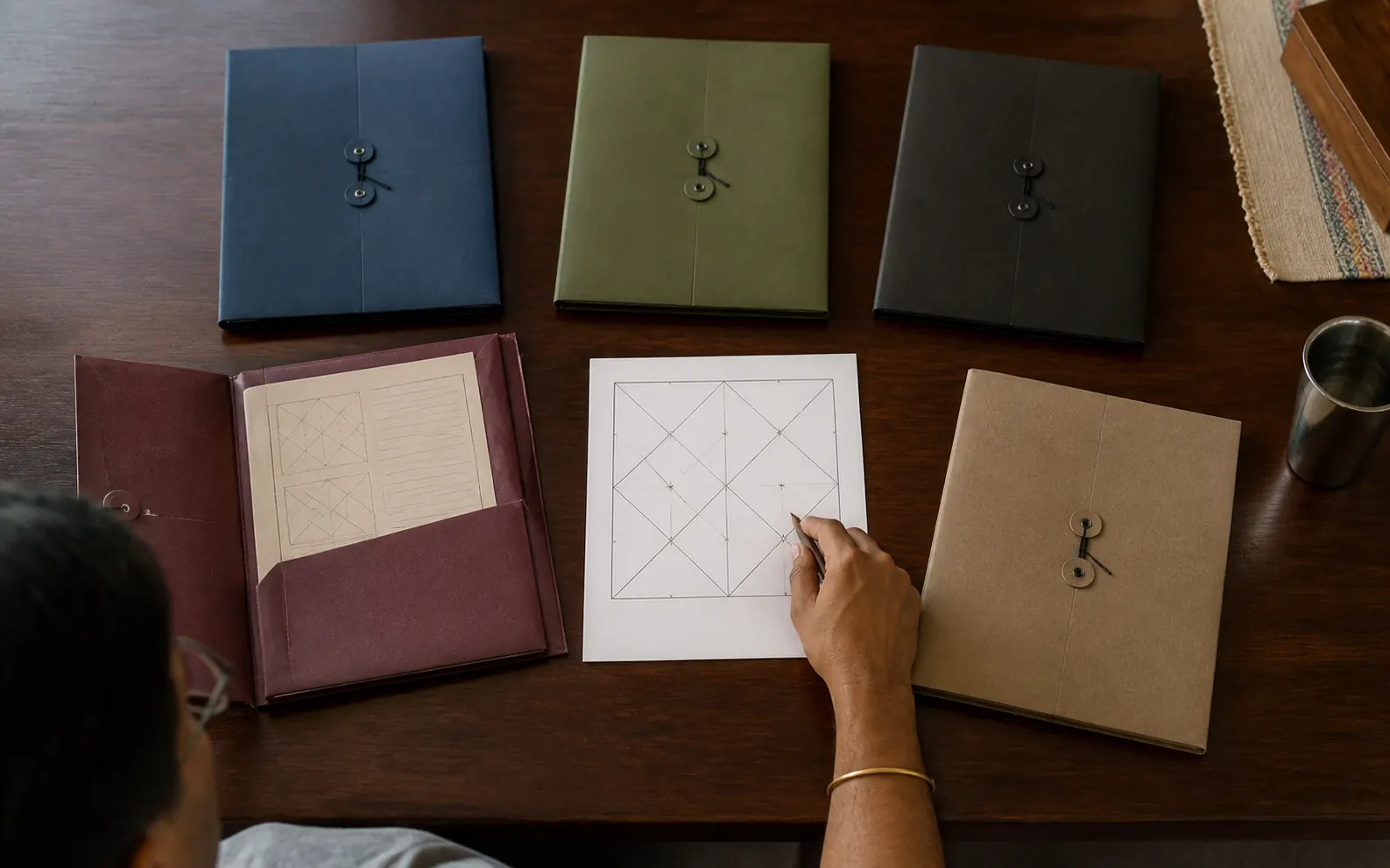
Chevvai dosham, manglik and kuja dosha are the same word in three languages, and the tests behind them are not the same test. Same planet, same idea: Mars sits in a house held to be difficult for marriage, and the chart is flagged. The names being interchangeable is the reason families assume the finding is too. The Tamil reading differs from the northern one in two separate ways, and only one of them is ever discussed.
This matters most to couples whose two families consult astrologers in two regions. That is the situation where the same Mars produces two documents that appear to contradict each other and neither astrologer has made an error.
What does chevvai dosham actually test?
Whether Mars occupies one of a small list of houses, counted from one or more fixed points in the chart. That is the whole mechanism. It is a membership test, not a measurement, and it resolves to yes or no with no intermediate values — which is part of why it lands so hard when it lands.
The commonly used South Indian reading counts Mars in the 2nd, 4th, 7th, 8th and 12th. A North Indian reading in the Charak lineage counts the 1st, 4th, 7th, 8th and 12th. Three houses are shared. The southern list drops the 1st and adds the 2nd, and that single swap is responsible for a great deal of family argument.
What the test reports, then, is that a planet fell inside a listed house under a named reading. It reports nothing about two people, and it deserves to be read at that size.
Getting the house number right requires an ascendant, which requires a birth time and a place, resolved against the historical local-time rules in force at that moment and not the ones in force now. Where Mars was is not in dispute: our positions come from the JPL ephemeris and agree with it to a fraction of an arcsecond. Which house that longitude falls in is a separate question, and it is the one that moves when a birth time is uncertain. You can see the houses under each reading side by side on the chevvai dosham checker.
The Tamil list descends from its own verse
The southern enumeration comes from the Manasagari verse — the one Raman cites as the Kerala Sastra — which gives 2, 12, 4, 7 and 8 and does not contain the 1st. The northern one descends from a verse attributed to the Brihat Parashara Hora Shastra that gives 1, 12, 4, 7 and 8 and does not contain the 2nd. Neither list is an edit of the other. They are two enumerations from two texts.
The six-house list a reader is most likely to have been handed, 1, 2, 4, 7, 8 and 12, is the union of those two and appears in no single classical text; all five documented house lists, with the verse each is sourced to, are set out in the five manglik house lists.
What the Tamil reading does with the list it received is the part that does not travel. The house it adds is also the house it is most often challenged on: the 2nd is read as family and speech instead of as marriage directly, so a reader who has been told the northern list is the classical one hears its inclusion as an embellishment. It is not one. Raman reproduces the same enumeration without qualification, and a Tamil astrologer counting Mars in the 2nd is applying a list as received.
The finding also sits in a different place in the Tamil apparatus. A Tamil report is built on the ten poruthams, and chevvai dosham is not one of them and does not enter their count; it is a gate standing beside them. So a pairing can clear porutham after porutham and still be stopped on Mars, and a family handed a porutham sheet and a refusal in the same conversation is usually looking at two findings that were never weighed against each other. Nothing in a northern report occupies that position, because there is no porutham sheet for it to stand beside.
The southern list is not the northern list plus a house. It is a different verse, and the difference is older than the argument about it.
Why is the reference point the bigger of the two choices?
Because it decides how many chances a chart gets to be flagged, and three chances catch far more charts than one. A northern reading typically judges Mars from the ascendant alone. Tamil practice commonly judges it from the Moon and from Venus as well, following the verse that names all three — lagnendu śukrād duḥsthāne. A chart clean from the ascendant may be flagged from the Moon.
Both choices are documented, both are defensible, and they are not remotely the same size. Measured on one fixed corpus of 2000 charts, with the planets held still and only the rule changed, the house-list argument — the one that gets had in public, 1st house against 2nd — moves the share of charts flagged by roughly 3 percentage points. The reference-point choice, which is rarely stated on a report at all, moves it by roughly 29. That attribution is the subject of its own piece, and it is the single most useful thing to take away from any of this.
The sources do not even agree on which of the three points carries most weight. Raman holds the dosha weakest from the ascendant and strongest from Venus; the OP and RMP panchangas hold the ascendant to carry double the weight of the other two. Both orderings get reported here, because choosing between them is not a choice we can source. And where a report prints a severity percentage, that number is a rendering of an ordering stated in words, not sourced arithmetic.
So the two names being interchangeable is misleading in practice. A Tamil astrologer counting from three reference points and a Delhi astrologer counting from one are not applying the same test to the same chart. They are applying two tests that happen to share a name, and the smaller of the two differences is the one that gets discussed at the dinner table.
Five documented profiles, one Mars
Put Mars in the 11th house from the ascendant, which is a dosha house on no list at all, and in the 8th from the Moon. A northern reading judging from the ascendant alone returns nothing. A Tamil reading judging from three points returns chevvai dosham, in the 8th, from the Moon. No planet moved. No birth time changed. The two documents disagree completely, and both are correct readings of their own rule.
Now flip it. Mars in the 2nd from the ascendant is chevvai dosham under the southern list and clean under the northern one, from the same reference point. That is the house-list axis on its own, and it produces a real disagreement too, just a much rarer one, which is exactly what the measured swing says.
The rates behind those two charts run wide. Across the same corpus the narrowest reading, Astro-Vision (serious Kuja dosha only), flags 11.7% of charts, while the broadest, the seven-house reading used by the OP / SKU panchangas, flags 73%. The South Indian five-house profile sits between them and above the North Indian one. Taken chart by chart instead of as rates, 61.4% of the corpus is flagged under at least one of these traditions and clean under at least one other. That is a statement about how often the traditions part company, and not about any particular chart. What it establishes is narrow and should be stated narrowly: for most charts there exists a citable reading that says chevvai dosham and a citable reading that says nothing of the kind.
The north-against-south framing this post uses is itself a simplification. G.H. Visweswara set eight Kannada panchangas side by side in a comparison published by Saptarishis Astrology and found their rules diverging enough that, in his own words, a couple refused in Mysore could be approved in Mangalore. Eight publications, one language, one state. The real picture is finer-grained and considerably less tidy than any map of it.
These manglik figures are sampled, not exhaustive, because Mars needs a date, a time and a place where a star-based koota needs only a birth star, and 2000 generated charts is the sample. How that corpus was built, and the age and geography profile it does not stand in for, is set out in the census behind the disagreement rate.
Which signs remove the finding, and on whose authority?
Two exemptions are blanket. Mars in Aquarius produces no dosha in any house whatsoever, and the same holds for Mars in Leo. Beyond those, five houses each exempt two specific signs: Mars in the 2nd is a dosha provided that house is other than Gemini or Virgo; in the 12th, other than Taurus or Libra; in the 4th, other than Aries or Scorpio; in the 7th, other than Capricorn or Cancer; in the 8th, other than Sagittarius or Pisces. So Mars in the 7th in Capricorn is exempt, and Mars in the 7th in Libra is not, under the same source.
Raman states them and the OP, DP and RMP panchangas repeat them identically, which is to say they arrive with the same authority as the house lists themselves. They are the best-attested rule in the whole registry, and they are frequently left out of the conversation that delivers the verdict. That omission is the most common way a chevvai dosham finding overstates itself.
One structural detail deserves a note, because it looks like a gap and is not. There is no exemption for the 1st house on that list. Raman’s list is the Kerala set, and the Kerala set does not contain the 1st house at all, so the absence follows from which verse he is working from. Completing the list with a first-house entry would be inventing one.
Small point, and the kind of tidy-up that turns a citation into a fabrication.
Beyond the sign list there is a large numbered family of cancellations, most of it from the Desabhatla slokas: Mars in its own sign, Mars exalted, Mars conjunct or aspected by Jupiter, Jupiter or Venus in the lagna, both parties carrying the dosha. The Sanskrit is printed in full in the Desabhatla compilation, which is why it repays reading over a secondary description of it. One widely repeated exemption does not have that provenance: the claim that the dosha lapses at twenty-eight, or thirty. No classical text specifies an age. Jagannath Hora attributes the belief to a misreading of the Saturn return, which does fall around that age and has nothing to do with Mars. It is excluded here, and named rather than dropped quietly, because a reader is entitled to know it was considered.
Papasamyam weighs both charts, not one planet
Tamil and Kerala practice does not stop at whether one person carries a named dosha. It asks whether malefic load balances across the two charts, which is a different question with a different answer. Northern practice has no equivalent of it, and its absence changes what the chevvai dosham finding is for.
The mutual-cancellation rule everyone knows — both parties manglik, therefore cancelled — is stated by Raman, by Desabhatla and by four panchangas. The SKU panchanga disputes it in a specific and rather demanding way: it holds that the two doshas must be equal, not merely both present, and that otherwise the marriage should strictly not be allowed. Papasamyam is how that comparison is actually performed. It is a weighing, not a matching, and it is set out in the papasamyam piece. The papasamyam calculator prints the malefic count for each side instead of a single verdict, because the balance is the finding.
The southern method is also more granular than the word “dosha” suggests. Desabhatla’s account of dosha samyam weights each malefic by which house it sits in and by which planet it is, then asks whether weakness in a house on one side is met by strength in the same house on the other. He is explicit that the groom’s side may carry up to double the affliction, a rule with a social history behind it as much as an astrological one, and one a reader should notice rather than pass over. Whatever else that method is, it is not a yes-or-no test on one planet.
The nucleus of the same idea is already in the classical cancellation set. One of Desabhatla’s conditions applies when the groom’s chart carries more malefics in the relevant houses than the bride’s — pāpādhikye vare śreṣṭha — which is a comparison across two charts, not a judgement about one. Another ties the whole question to the guna total: rashi friendship, or matching gana, or simply a high score, and no mangal dosha obtains. That is the only classical rule we have found that links the Mars finding to the thirty-six-point system arithmetically, and it is a good deal less famous than it should be.
A Tamil reading that stops at “chevvai dosham, yes” has stopped early by the standards of its own tradition. The second stage is comparative, and it needs the other chart on the table.
What did B.V. Raman say about Tamil practice?
“It is only in the Kerala Sastra that mention is made of Kuja Dosha… It is unfortunate that throughout South India, especially in the Tamil areas, much is made of the so-called Kuja Dosham, and this bugbear has been the means of destroying the happiness of many families.”
The sharpest criticism of how chevvai dosham is used does not come from outside the tradition. It comes from B.V. Raman, in print, in the book a great deal of modern matching takes its tables from.
That is one authority’s view of the weight the finding is given, and it settles nothing. Raman is arguing about emphasis and not about the rule, and the same book states the house list and the exemptions in full. It is quoted here for one narrow reason: a family told that a tradition speaks with a single voice on chevvai dosham can read a senior figure inside that tradition saying otherwise, decades ago, on a printed page. If the objection in the room is that questioning the verdict is disrespectful to the tradition, that quotation is the tradition.
What should you ask for?
Three facts turn a chevvai dosham verdict back into something a family can check, and none of them requires an argument. All three have one-line answers, which is the useful property: an astrologer who can answer them in ten seconds is not being interrogated.
- Which house Mars occupies. One number between 1 and 12. Ask for it from each reference point that was used, not just one.
- Which reference points were used. Ascendant only, or also the Moon and Venus. This is the axis that moves the verdict most and it is almost never printed.
- Which sign Mars is in. The sign exemptions turn on it, and two signs remove the finding outright under the same sources that create it.
With those three, the verdict stops being a judgement about a person and becomes a membership test anyone can carry out with the tables in front of them. Mars in the 2nd house is chevvai dosham under the South Indian list and clean under the North Indian one, and that sentence can be verified by reading two lists. Mars in the 7th is flagged under every list here, which is also worth knowing, because it means a second reading will return the same finding and not a different one, and a family is better served by knowing that in advance than by discovering it after paying for a second opinion.
What none of it settles is which tradition is right. We can tell you which houses each named tradition counts, which reference points it uses, which text each comes from, and how often the readings part company across a fixed corpus. Which of them is correct is not a question more computation answers, and a document that offers to has stopped citing and started asserting.
Questions people ask
Why does the South Indian list include the 2nd house and not the 1st?
Because it descends from the Manasagari verse, which enumerates 2, 12, 4, 7 and 8 and does not contain the 1st house. The northern list descends from a verse attributed to Brihat Parashara Hora Shastra that enumerates 1, 12, 4, 7 and 8 and does not contain the 2nd. Neither list is an edit of the other; they are two enumerations from two texts.
Does chevvai dosham lapse at the age of 28?
No classical text specifies an age. Jagannath Hora attributes the belief to a misreading of the Saturn return, which does fall around that age and has nothing to do with Mars. It is excluded from our rule set and named as excluded, so a reader can see it was considered rather than missed.
If one astrologer says chevvai dosham and another says the chart is clean, who is right?
Both can be reporting their own tradition accurately. Ask each which houses were counted and which reference points were used. If the two answers differ, you are looking at two documented readings rather than an error, and no recomputation will collapse them into one.
Sources
Claim-level links appear in the article; URL-derived IDs keep each full reference identifiable if this list is reordered.
- DR-1AAO7WB B.V. Raman, Muhurtha (Electional Astrology) — the sign exemptions, and his own criticism of Tamil practice — Raman Publications, Bangalore, via the Internet Archive, 1948
- DR-1KQSIWX Sreenivas Desabhatla, “Kuja Dosha or Mangalik or Mangala Dosha” — the cancellation slokas in Sanskrit — Sreenivas Desabhatla, 2013
- DR-DGW0OM Sreenivas Desabhatla, “Dosha Samyam / Papasamyam in matching” — the malefic-balance method — Sreenivas Desabhatla, 2014
- DR-1T0NVLF G.H. Visweswara, “Comparison of Panchangas for Horoscope Matching for Marriage” — eight panchangas, different kuja dosha rules — Saptarishis Astrology, 2024
- DR-K482ED Brihat Parashara Hora Shastra — the text the northern house list is attributed to — Internet Archive (public domain scan), 2021
- DR-30WG0O JPL Planetary and Lunar Ephemerides (DE440/DE441) — where Mars actually was, independent of any reading of it — NASA Jet Propulsion Laboratory, California Institute of Technology, 2020
- DR-9AH1WP IANA Time Zone Database — the local-time rules an ascendant, and therefore a house number, depends on — Internet Assigned Numbers Authority, 2026
Use the evidence
Check it on your own chart
These tools apply the same named rules described above. They are free, require no sign-up, and store nothing.