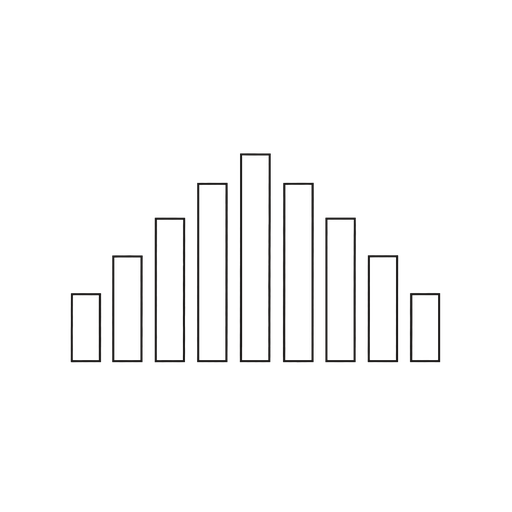
How common is your score, actually?
See the distribution across every nakshatra-pada pairing: average score 20.1 out of 36, share above 18, and how common each Guna Milan score really is.
- Reference
- No personal details
No personal details are needed for this tool.
20.1 / 36 average
The average couple scores 20.1.
Measured across all 11,664 possible nakshatra-pada pairings — the entire population, not a sample. The median is 20.5.
How many clear each line
| Score of at least | Share of all pairings |
|---|---|
| 18 / 36 | 66.7% |
| 21 / 36 | 49.5% |
| 24 / 36 | 33.8% |
| 28 / 36 | 6.9% |
| 30 / 36 | 2.8% |
Each koota on its own
| Koota | Worth | Score full | Score nothing |
|---|---|---|---|
| varna | 1 | 62.5% | 37.5% |
| vashya | 2 | 22.2% | 77.8% |
| tara | 3 | 33.3% | 0% |
| yoni | 4 | 7.3% | 7.1% |
| graha Maitri | 5 | 38.9% | 5.6% |
| gana | 6 | 33.3% | 22.2% |
| bhakoot | 7 | 50% | 50% |
| nadi | 8 | 66.7% | 33.3% |
Look up any whole-number score
Open the measured distribution and most common koota patterns for the exact total printed on a report.
What this tool computes
The score of every possible pairing. There are exactly one hundred and eight nakshatra-pada positions, so 11,664 ordered pairs is the whole population rather than a sample of it. Each one is scored on all eight kootas, and the page publishes what comes out: the mean, the median, the share reaching each threshold, and the rate at which each koota awards full marks or none.
Nothing here is estimated or sampled. Run it twice and the same numbers come back, because the whole population was counted both times.
The part that usually goes unsaid
A score arrives without a denominator. Twenty-six out of thirty-six reads like a mark on a school paper, where twenty-six is respectable and thirty-two would have been better. It is not that kind of scale. The mean across every pairing is 20.1 and the median is 20.5. Only 33.8% of pairings reach twenty-four, and only 6.9% reach twenty-eight. The top of the range is thinly populated, and a total in the twenties is the ordinary result.
The same is true of the findings that end conversations. A shared nadi appears in 33.3% of pairings because three nadis divide twenty-seven stars. Bhakoot fails in 50% because six of the twelve rashi distances raise it. Full yoni marks go to just 7.3%. These rates are properties of the tables, fixed before anyone was born.
The enumeration measures how frequently a table returns a result, not whether that result predicts a marriage outcome.
What the result does and does not mean
These rates describe equally weighted possible chart pairings. Common does not mean harmless and rare does not mean ruinous; what a tradition makes of a finding is a separate question from how often that finding fires. What the rate tells you is how frequently a rule returns a result in this enumeration. It cannot establish the rule's predictive value or why a particular match was refused. Those questions require separate evidence.
It also puts the accept line in its place. Eighteen out of thirty-six is a convention rather than a doctrine, and 66.7% of pairings clear it. The line sits just below the middle of the distribution, which is its densest part — so a point either way moves a great many couples across it.
These figures are recomputed from the engine whenever the site is built, not typed into the page. If a table or a rule changes, the number here changes with it.
Is eighteen out of thirty-six a good score?
It is the conventional pass mark and it is below the average pairing, which scores 20.1. Half the field reaches twenty-one or more: 49.5% of pairings. Whether eighteen is enough is a judgement each tradition makes for itself, and they do not agree. What the distribution can say is that clearing it is unremarkable rather than distinguished.
Why is nadi dosha so common?
Arithmetic. The twenty-seven stars divide into three nadis of nine, so two stars picked independently share a nadi about one time in three, and the measured rate is 33.3%. The closed-form value and the exhaustive count agree exactly.
Does a high score mean the marriage will be fine?
We make no claim of that kind about anyone. A total records what one scoring system concluded about two birth stars under one named configuration. The useful thing a base rate adds is scale: it tells you whether that conclusion is unusual, and how far a single disputed point would move it.