Free Kundli — your birth chart, drawn three ways
Generate a free kundli online from your birth date, exact time and place. View the same planetary positions in North, South and Bengali chart styles.
- Calculator
- Date, exact time and place
The free tool did not save these details or this result. Refresh the page and it is gone.
What this tool computes
You give it a date, a time and a place. It works out where each of the nine grahas stood in the sky at that moment, converts those positions to the sidereal zodiac that Vedic astrology uses, and assigns each one to a house counted from the sign that was rising on the eastern horizon. Then it draws the result three times: the North Indian diamond, the South Indian square, and the Bengali 3×3 frame with divided corners. The positions are calculated once. The three diagrams are three conventions for writing the same numbers down.
The three styles are the same chart
This causes more argument in families than anything else on a kundli. In the North Indian diamond the houses are fixed — the panel at the top centre is always the first house — and the sign numbers are written in, moving from chart to chart. In the South Indian square the signs are fixed — Aries occupies the same box in every chart ever drawn — and it is the ascendant marker that moves. Hand a South Indian square to someone who has only read diamonds and they will often say the chart is wrong.
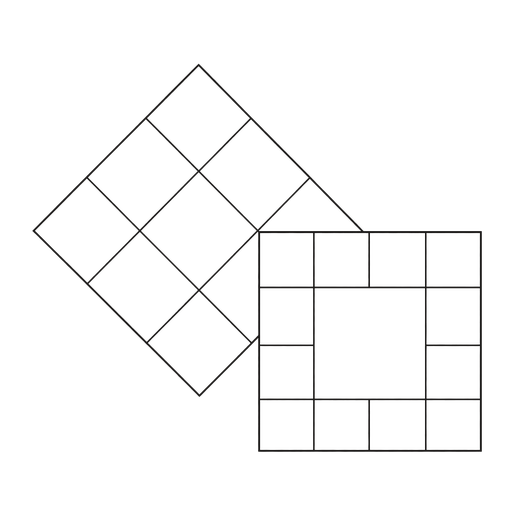
The Bengali frame also fixes the signs, but it is not the South Indian square turned sideways. Aries stays in the top-centre compartment, the signs proceed anti-clockwise, and four divided corner cells make twelve places around a blank centre. The lagna is marked in whichever fixed sign was rising. Other eastern manuscript and software conventions can look different, so this tool names the exact Bengali layout it draws instead of treating every eastern chart as one form.
Before two families argue about a chart, it is worth checking whether they are arguing about a drawing convention.
What the drawing does and does not settle
The positions underneath it are checkable. Our JPL validation measured a maximum Sun-through-Saturn difference of 0.44arc-seconds at sampled epochs from 1900 to 2100. An arc-second is one three-thousand-six-hundredth of a degree. The measurement is not a guarantee for every date, node position, house assignment or matching interpretation.
That is a statement about arithmetic and nothing more. A chart is a record of where the sky was. Whether a placement counts as a problem, whether a dosha applies, and what any of it is taken to signify are readings, and readings differ by tradition and by astrologer. This tool draws the record. It does not deliver a verdict, and a chart on its own is not one.
Every sidereal chart depends on the ayanamsa — the constant separating the sidereal zodiac from the tropical one. We use Lahiri, which Indian practice overwhelmingly uses. A different ayanamsa shifts every position by a fraction of a degree, which occasionally moves a planet sitting near a boundary into the next sign. Where that applies to your chart, the page says so.
Do I need my exact birth time?
For the planets, an hour of error changes very little; only the Moon moves enough to matter, at roughly half a degree an hour. For the houses it matters a great deal, because the ascendant advances through the whole zodiac in a day. Without a reliable time you still have correct planetary positions, but house placements should be treated as provisional.
Which style should I be looking at?
Whichever your family reads. There is no astrological difference between them. We draw all three so that a report can be shown to relatives in two regions without anybody having to translate it in their head.
Can I download the kundli as a PDF?
Yes, and it is your browser that makes it rather than us. Use the print button under the result and choose “Save as PDF” as the destination; the page is styled so that what prints is the chart, the positions and the settings that produced them, without the navigation and the calculator around them.
We do it that way deliberately. Generating the file here would mean a document containing somebody’s birth details existing on our side long enough to be delivered, and every free tool on this site is built on the opposite promise: the calculation happens, the answer comes back, and nothing is kept. Printing from your own browser means the chart never leaves your machine.
Why is my rashi here not the sign I have always used?
The sign most people know is the tropical Sun sign, from Western practice. A Vedic kundli reports the sidereal Moon sign. Those are two different bodies measured against two differently anchored zodiacs, so disagreement is the normal case, not an error in either.